
Interlocking piled walls for demanding retaining structures
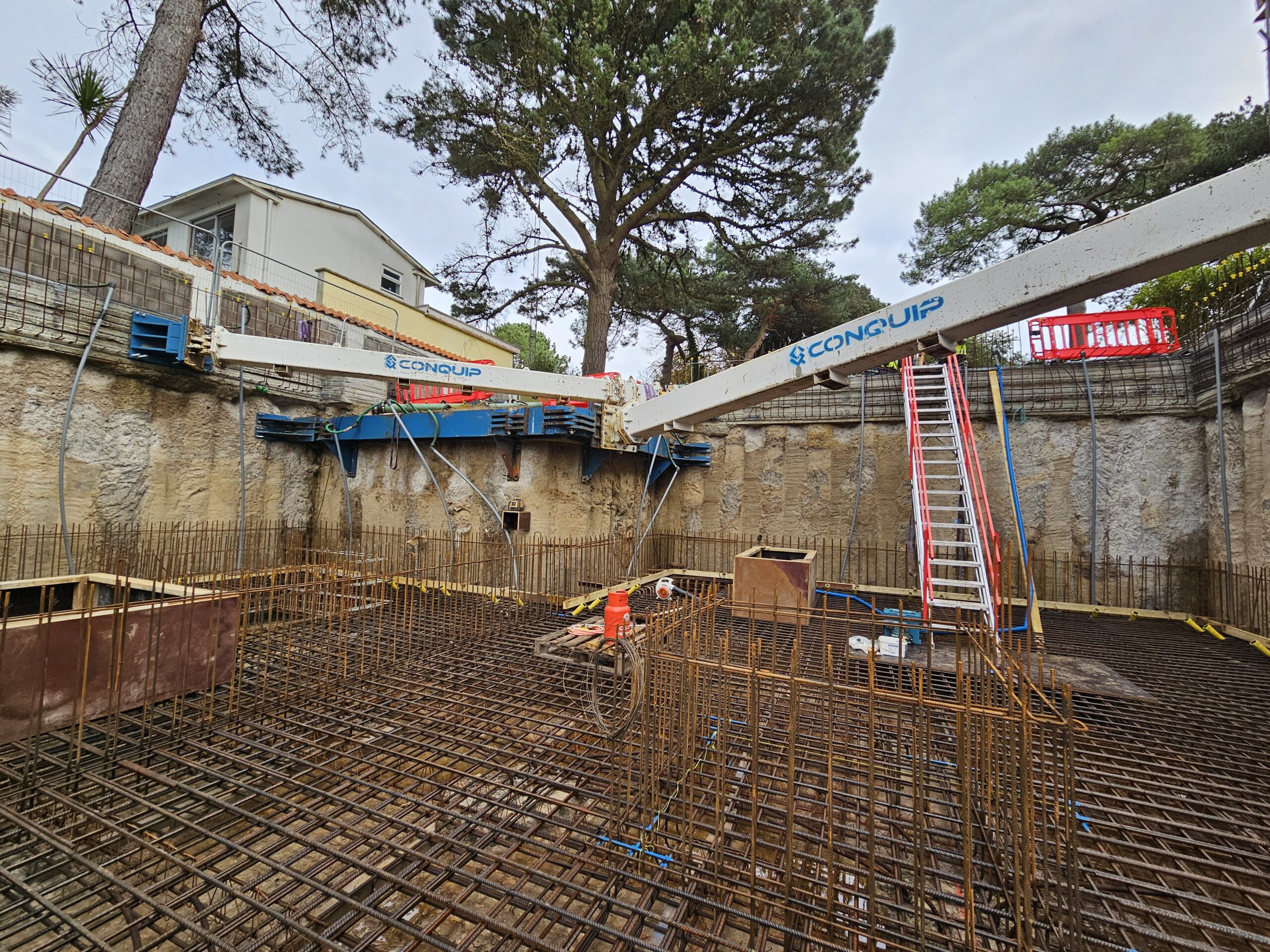
Secant piled walls are formed from overlapping bored piles to create a continuous retaining structure. The interlocking arrangement provides structural earth retention while also helping to control groundwater movement through the wall.
This makes secant piling particularly useful for basements, deep excavations and constrained developments where ground movement and water control are key considerations. The wall can be designed to support significant retained heights and can form part of either temporary works or the completed permanent structure. Pile arrangement, reinforcement and construction sequence are developed around the excavation depth, surrounding structures, groundwater conditions and wider project requirements.
Continuous Wall
Overlapping piles create structural retention
Water Control
Helps restrict groundwater movement
High Stiffness
Robust support to retained ground
Bored Installation
Suitable for constrained urban environments
How Secant Piled Walls Works
Secant walls are formed by constructing a sequence of overlapping bored piles. Primary piles are installed first, followed by secondary piles positioned so that they cut into the adjoining piles and create a continuous retaining line.
The completed pile arrangement acts together to retain the surrounding ground as excavation progresses. Reinforcement, pile spacing and the wider support system are developed around excavation depth, groundwater conditions, neighbouring structures and whether the wall forms part of the permanent works.
- Continuous retaining structure
- Suitable for deeper excavations
- Helps control groundwater ingress
- Reduced vibration through bored installation
- Can form part of permanent basement works
Best Suited For
Basements
Permanent or temporary excavation retention
Deep Excavations
High retaining requirements
Groundwater Conditions
Where water control is important
Urban Sites
Close to neighbouring structures
Boundaries
Retention close to site limits
Level Changes
Significant changes in ground elevation
Need practical advice before you enquire?
Speak to the team for quick guidance on your piling or foundation challenge.
The Process
A clear route from initial enquiry through to quotation and project delivery
Share site details
Tell us about your site constraints & project objectives
Review service options
We compare suitable methods to outline pros & cons, as well as other considerations
Receive expert advice
Get our expert guidance on buildability, programme fit and access.
Move to quotation
We confirm next steps to support smooth delivery throughout the project’s duration
Related Projects

See more of our work
Explore all of our completed projects across various sectors
Frequently Asked Questions
What is the difference between secant and contiguous piled walls?
Secant piles overlap, while contiguous piles have small gaps between adjacent piles. The continuous secant arrangement provides greater groundwater control.
Can secant walls be permeant?
Yes. They can be designed as part of the permanent retaining or basement structure.
Are secant walls waterproof?
They can significantly restrict groundwater movement, although the overall waterproofing strategy depends on the project design and required performance.
When would a secant wall be chosen instead of another retaining system?
Secant piled walls are often considered where excavation depth, nearby structures or groundwater conditions require a relatively stiff and continuous retaining solution. The appropriate retaining method should be selected around the complete site and excavation requirements.