
Fast, low-impact foundations with minimal site disruption
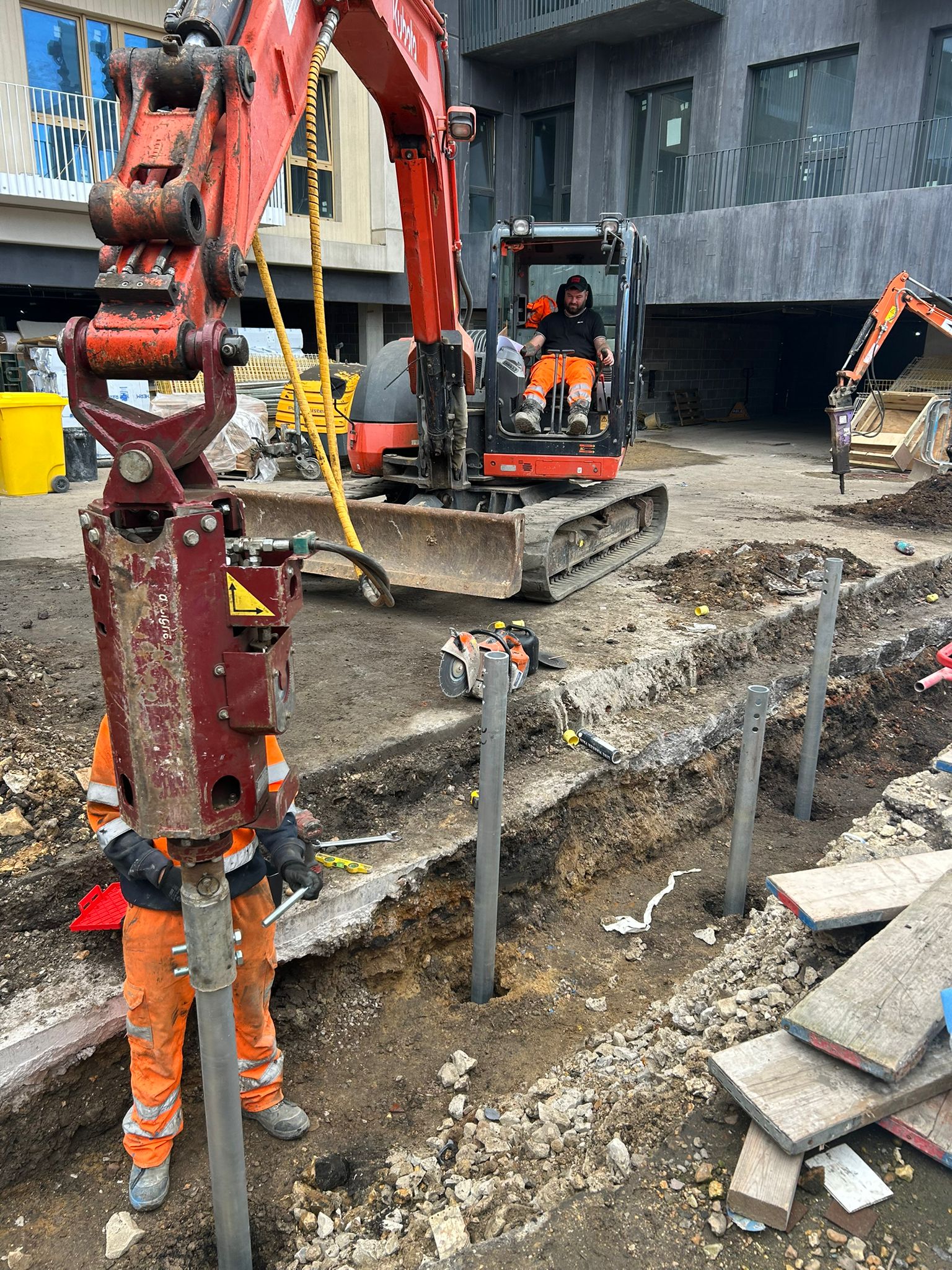
Screw piles are steel foundation elements fitted with helical plates and installed by applying rotational torque. Rather than excavating or driving the pile into place, the pile advances into the ground as it rotates.
Installation produces little spoil and relatively low noise and vibration, making screw piling especially attractive for restricted-access locations, sensitive sites and projects where rapid foundation installation is important. Compact installation equipment can also make the technique practical where conventional piling rigs would be difficult to mobilise. The pile configuration, helix arrangement and installation requirements are selected around structural loading, ground conditions and the needs of the proposed foundation system.
Low Vibration
Suitable around sensitive structures
Minimal Spoil
No conventional bored pile excavation
Rapid Installation
Efficient foundation construction
Restricted Access
Compact installation options available
How Screw Piling Works
Screw piles consist of steel shafts fitted with helical plates and are installed by applying rotational torque using specialist equipment. As the pile rotates, the helices advance through the ground until the required installation criteria are achieved.
The process requires no conventional pile bore and generates very little spoil. Installation can also be undertaken using relatively compact equipment, making screw piling particularly useful where access, vibration, noise or programme restrictions influence the choice of foundation method.
- Low noise & vibration
- Minimal ground disturbance
- Fast installation
- Suitable for restricted access
- No concrete curing period for pile shaft
Best Suited For
Restricted Access
Compact equipment and limited working space
House Extensions
Practical residential foundations
Sensitive Sites
Low vibration near existing structures
Lightweight Structures
Efficient foundation systems
Rapid Programmes
Fast installation and loading
Temporary Works
Potential for removable foundation systems
Need practical advice before you enquire?
Speak to the team for quick guidance on your piling or foundation challenge.
The Process
A clear route from initial enquiry through to quotation and project delivery
Share site details
Tell us about your site constraints & project objectives
Review service options
We compare suitable methods to outline pros & cons, as well as other considerations
Receive expert advice
Get our expert guidance on buildability, programme fit and access.
Move to quotation
We confirm next steps to support smooth delivery throughout the project’s duration
Related Projects

See more of our work
Explore all of our completed projects across various sectors
Frequently Asked Questions
Are screw piles suitable for house extensions?
They can be particularly effective where access is restricted or low-vibration installation is desirable, subject to ground and loading requirements.
Do screw piles need concrete?
The pile itself is a steel element, although concrete ground beams, caps or other foundation components may still form part of the overall design.
Do screw piles create spoil?
Very little compared with conventional bored piling because the pile is rotated directly into the ground.
How is the required screw pile solution selected?
Pile size, shaft arrangement and helix configuration are developed around structural loads, ground conditions and installation requirements. Site information and ground investigation data can help determine whether screw piling is appropriate.